ANTHONY NISTOR // SUMO BOT

Sumo Bot Number 12

A closed wedge shell hides high-torque wheel drives, a lithium pack, edge sensing, and a controller laid out for a match. Number 12 won the school competition.

// SYSTEM ARCHITECTURE

How the Sumo Robot Is Built

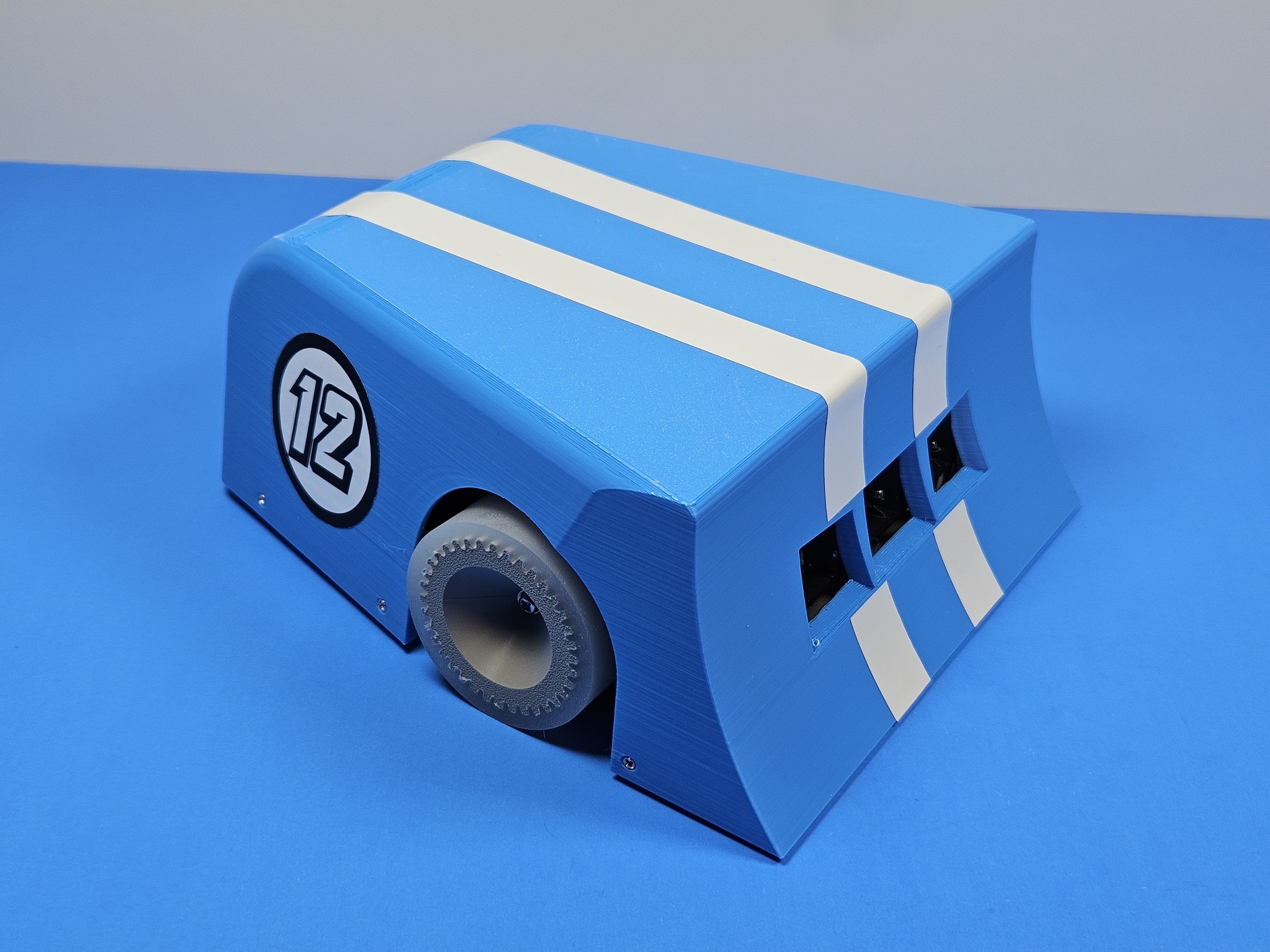
The shape follows the ring. The front is low so it can get under another robot. Sensors look down for the edge and out for an opponent. The drivetrain and battery sit inside the printed scoop.

  • Wedge Shell A wide printed body in blue and white, wearing a roundel with the number 12.
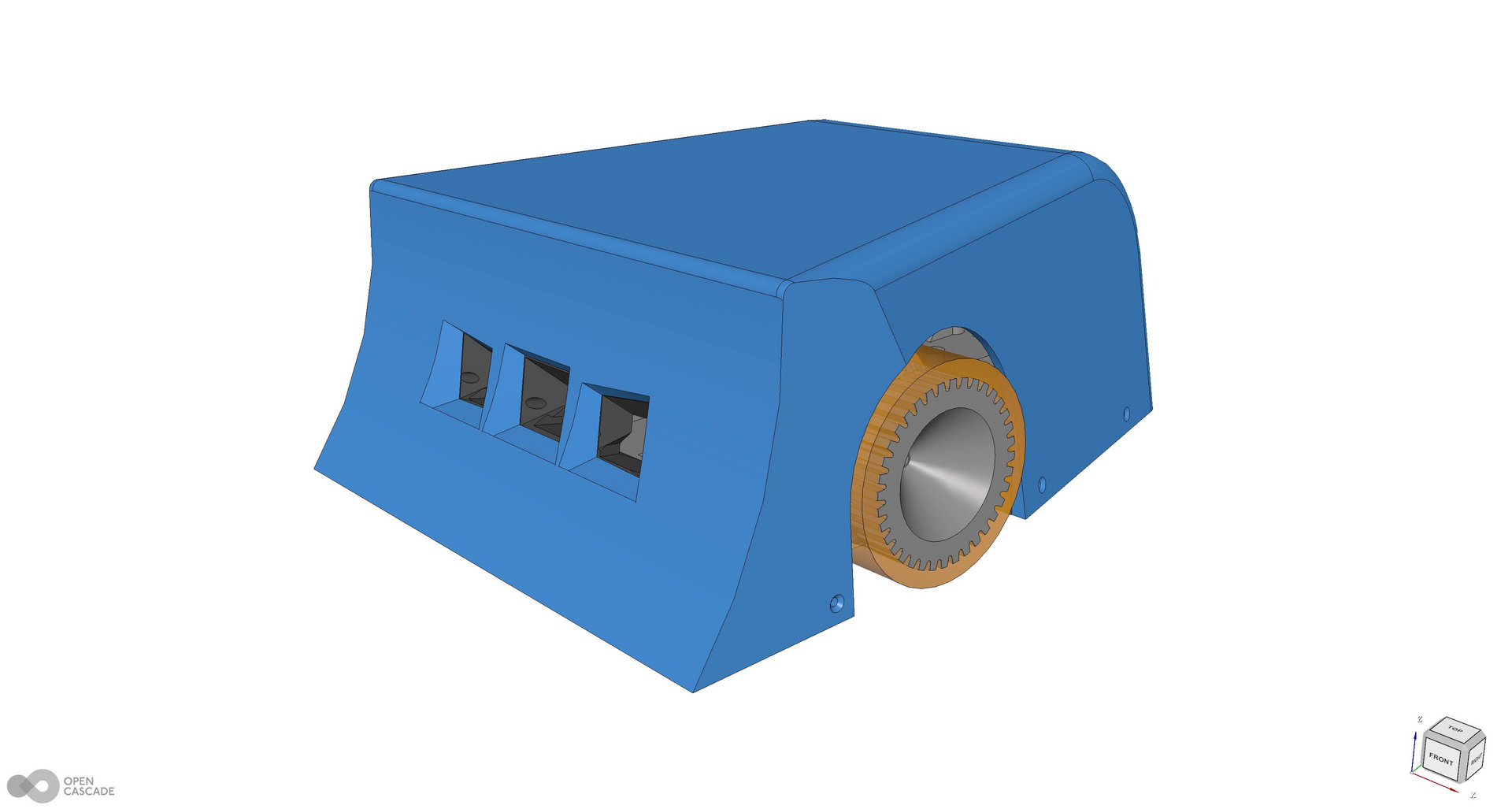
  • Edge and Opponent Sensing Three windows sit low on the front for reflectance sensors. Openings in the sides give a view beside the robot.
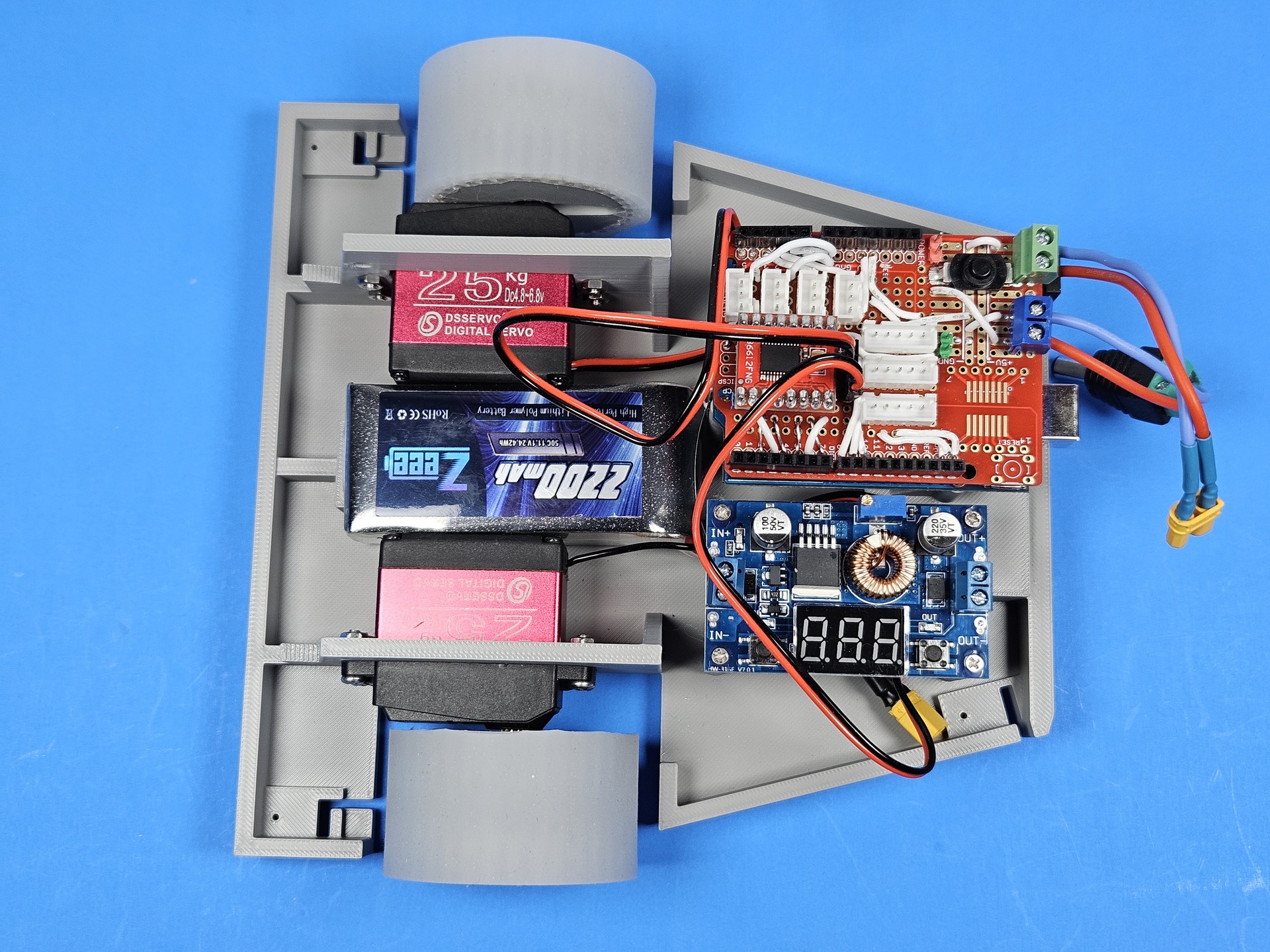
  • High-Torque Drive Two digital servos turn the wheels. A 2-cell lithium pack and a buck converter feed the logic through a motor-driver stage.
SUMO_SYSTEM.LOG ACTIVE
1. SENSORS

Front edge sensors and side openings

SENSE
↓ Edge and opponent readings
2. CONTROLLER

Arduino-compatible board and motor driver

DECIDE
↓ Motor commands
3. DRIVE

Two high-torque servos on the wheels

PUSH
// ELECTRONICS MAP

Power, Pins, and the Motor Driver

The wiring diagram is the map of the match electronics: battery, converter, controller pins, and the driver.

SUMO_ELECTRONICS.JPGWIRED

Battery to Driver

The diagram routes the battery through a DC-DC converter, breaks out the Arduino pins, and lands the motor signals on a dual-channel driver with PWM, direction, and standby inputs.

// HARDWARE & SOFTWARE

System Component Breakdown

01

Wedge Body

Printed scoop with wheel clearance, sensor windows, and a cover over the electronics.

02

Wheel Servos

A pair of high-torque digital servos mounted as the wheel drives.

03

Power Stage

2-cell 2200 mAh lithium pack and a buck converter with a voltage display.

04

Controller

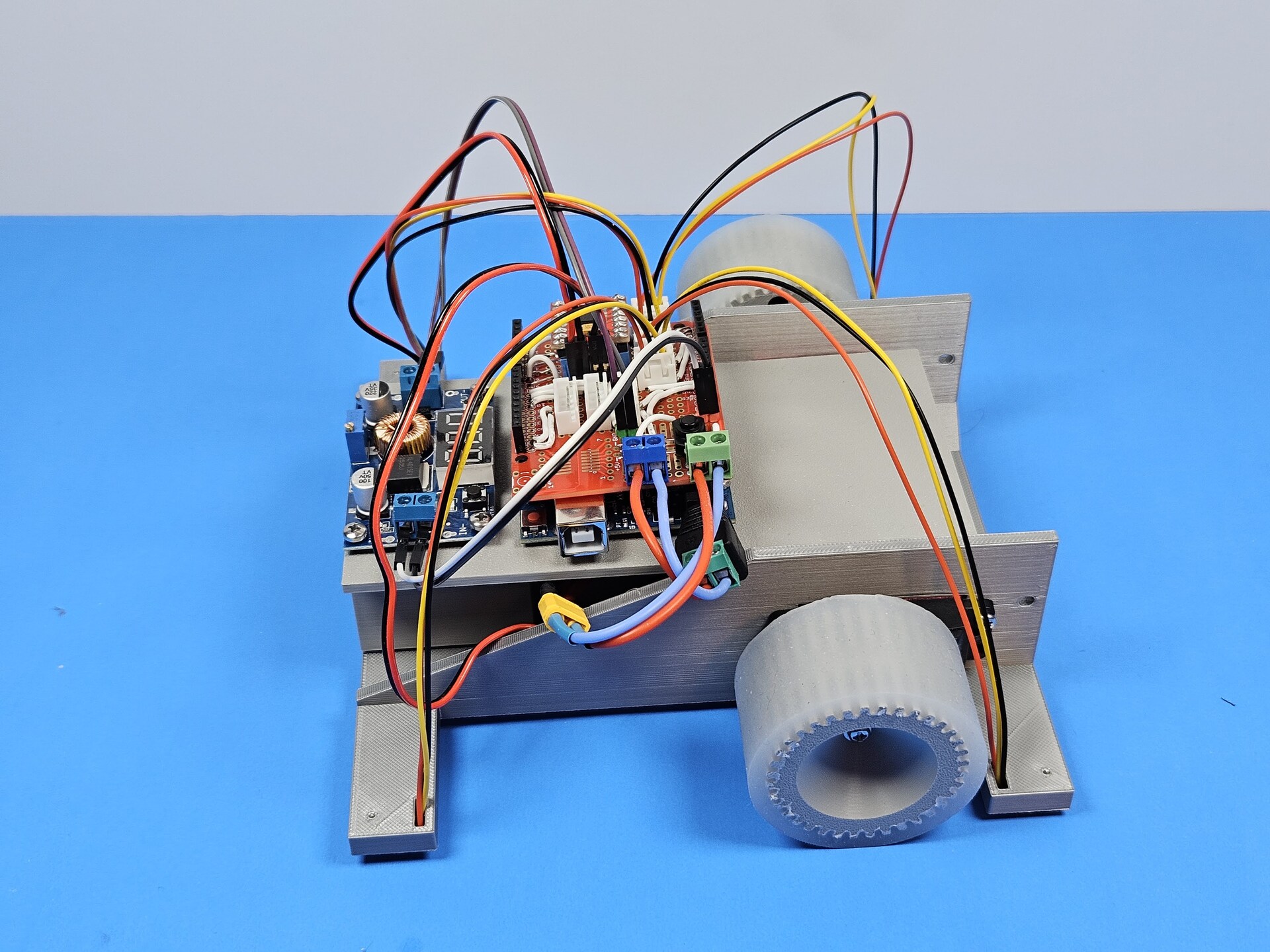
Arduino-compatible board with sensor connectors and a motor-driver stage.

// PROJECT MEDIA

Video Demonstration & Photos

The painted robot, the open chassis, and a driving test from the build.

DRIVE_TEST.MP4 RING TEST

Driving Test

A recording from the bench and ring tests made while the robot was still being proven, before the school competition.
Number 12
CLICK TO ENLARGE

Number 12

The painted wedge with the roundel, stripes, and front sensor windows.
Power and Drive
CLICK TO ENLARGE

Power and Drive

Two digital servos, the 2200 mAh pack, and the converter in the chassis.
Open Wiring
CLICK TO ENLARGE

Open Wiring

Controller, driver, and sensor leads before the cover went on.
Exterior CAD
CLICK TO ENLARGE

Exterior CAD

The wedge, wheel, and front sensor windows in the model.
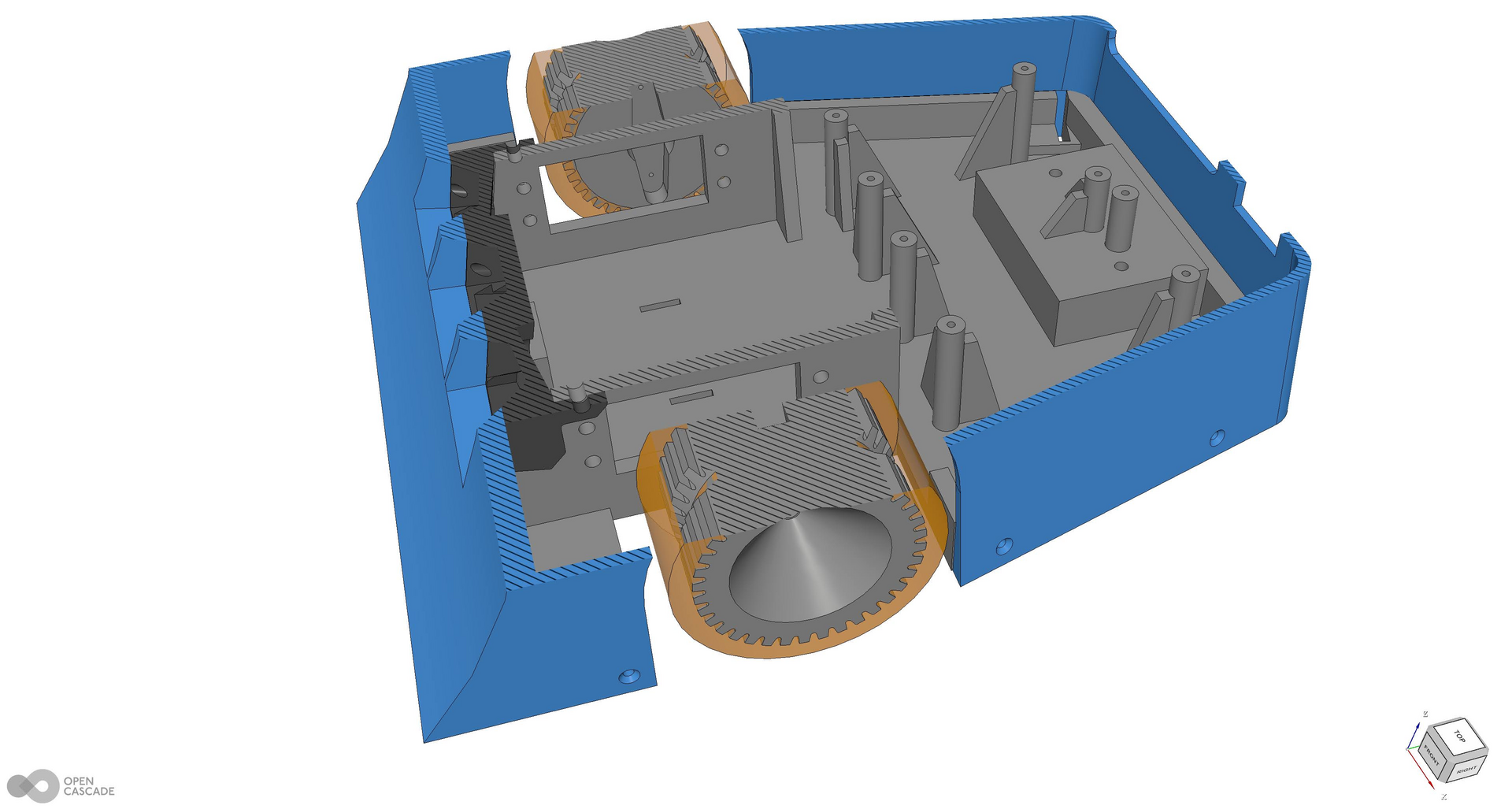
Interior CAD
CLICK TO ENLARGE

Interior CAD

Cutaway of the shell with the wheels and internal structure.
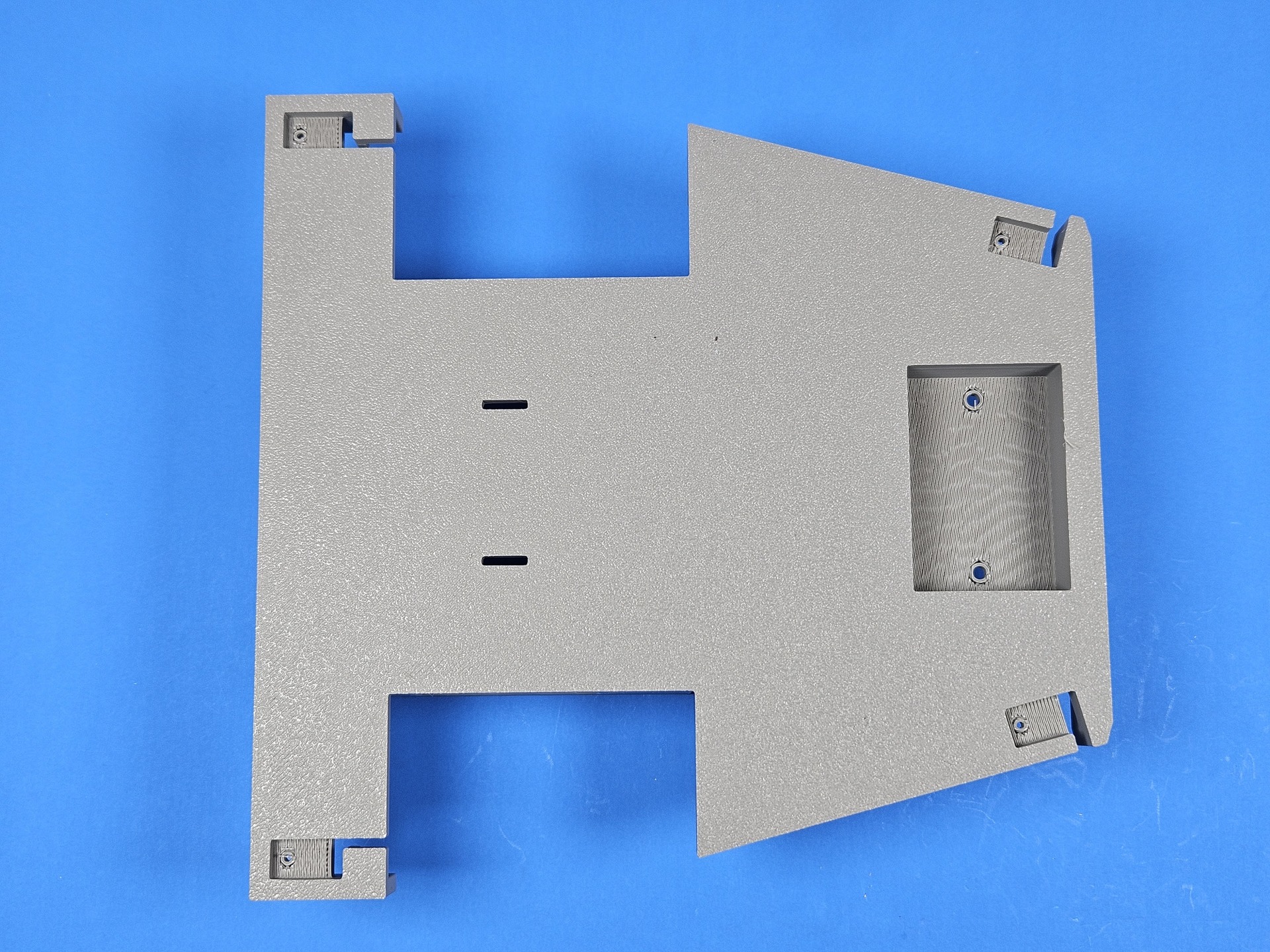
Chassis Pan
CLICK TO ENLARGE

Chassis Pan

A printed structural plate from the mechanical build.
// SLIDESHOW

All Project Pictures

120 photographs and drawings from this build.

20260226_181751.jpg 1 / 120
20260226_181751.jpg
// SCHOOL COMPETITION

Number 12 won

These are the match recordings from the school competition. Robot number 12 won the event.

VID-20260410-WA0003.mp4 CLIP 01
VID-20260410-WA0005.mp4 CLIP 02
VID_20260309_130234064.mp4 CLIP 03
PXL_20260410_181851890.mp4 CLIP 04
// TECHNICAL SPECIFICATIONS

System Parameters & Metrics

PARAMETER SPECIFICATION / VALUE
Class Mini sumo-style wedge robot
Identity Number 12
Front Sensing Three low windows for edge sensors
Drive Two high-torque digital servos
Battery 2-cell 2200 mAh lithium pack
Logic Power Buck converter with voltage display
Controller Arduino-compatible board and motor driver
Structure 3D-printed wedge shell and chassis
Competition School sumo event — first place, number 12