The core platform I designed for my robotixone.com business. A small squared-off robot that packs two driven wheels, a caster, a battery, and a purpose-built controller into one printed chassis.
Designed for the business I started, robotixone.com, Stackr is a modular mechatronics platform. A cost-effective, highly extensible differential-drive mobile robot it was developed for robotics education and hands-on experimentation. Powered by an Arduino Nano ESP32, TB6612FNG driver, and 18650 LiPo battery setup, it is designed to seamlessly support modular add-ons for a wide range of applications.
| ISSUE | SOLUTION |
|---|---|
| Actuating motors directly at high speed reset the controller | Added a capacitor to flatten the current spikes. Used a ramp-up algorithm for the motors. |
| Assembling the components took to much time | Created jigs to speed-up the soldering process. Redesigned the PCB to move several components onboard and have them placed by the PCB manufacturer. |
| BLE connection kept resetting | Implemented a different approach to connection. |
| Robot wheels got stuck at low speeds | Implemented a kick off procedure to start at higher speed for a fraction of a second to create enough torque to move from static friction to rotational friction and immediately reduce the speed to go according to the desired speed. |
| Find the right form factor to accommodate all components | Run through several design configurations until all components were properly accommodated |
| Make it mechanically compatible with the Arduino Alvik | Due to the fact that the motors didn’t allow to use the same case sizes it required some adjustments in such a way that the mounting points remain compatible with the Arduino Alvik robot. |
The robot driving.
Stackr controlled using the mobile app.
Because Stackr is the main platform of the robotixone.com business I started it had to provide a lot of flexibility. The case of the robot had to be low profile to allow mounting any add-on possible. It had to provide general connectors in an accessible place that expose all pins from the onboard MCU and a set of dedicated connectors for faster integration (Servo, I2C)
Arduino Nano ESP32 is the onboard MCU. It was selected because the Arduino platform is the most used platform by far and it benefits from a lot of open source libraries.
Using very cost effective geared motors in combination with the motor controller the drive train is the main feature that comes with the robotic platform.
In the spirit of expandability the chassis was provisioned with two types of mounts. It supports attaching Lego Technics pieces to it or for a stronger more permanent mount it has 3mm inserts that allows to use screws to mount add-ons.
From loose parts, through the closed shell, to the installed controller.
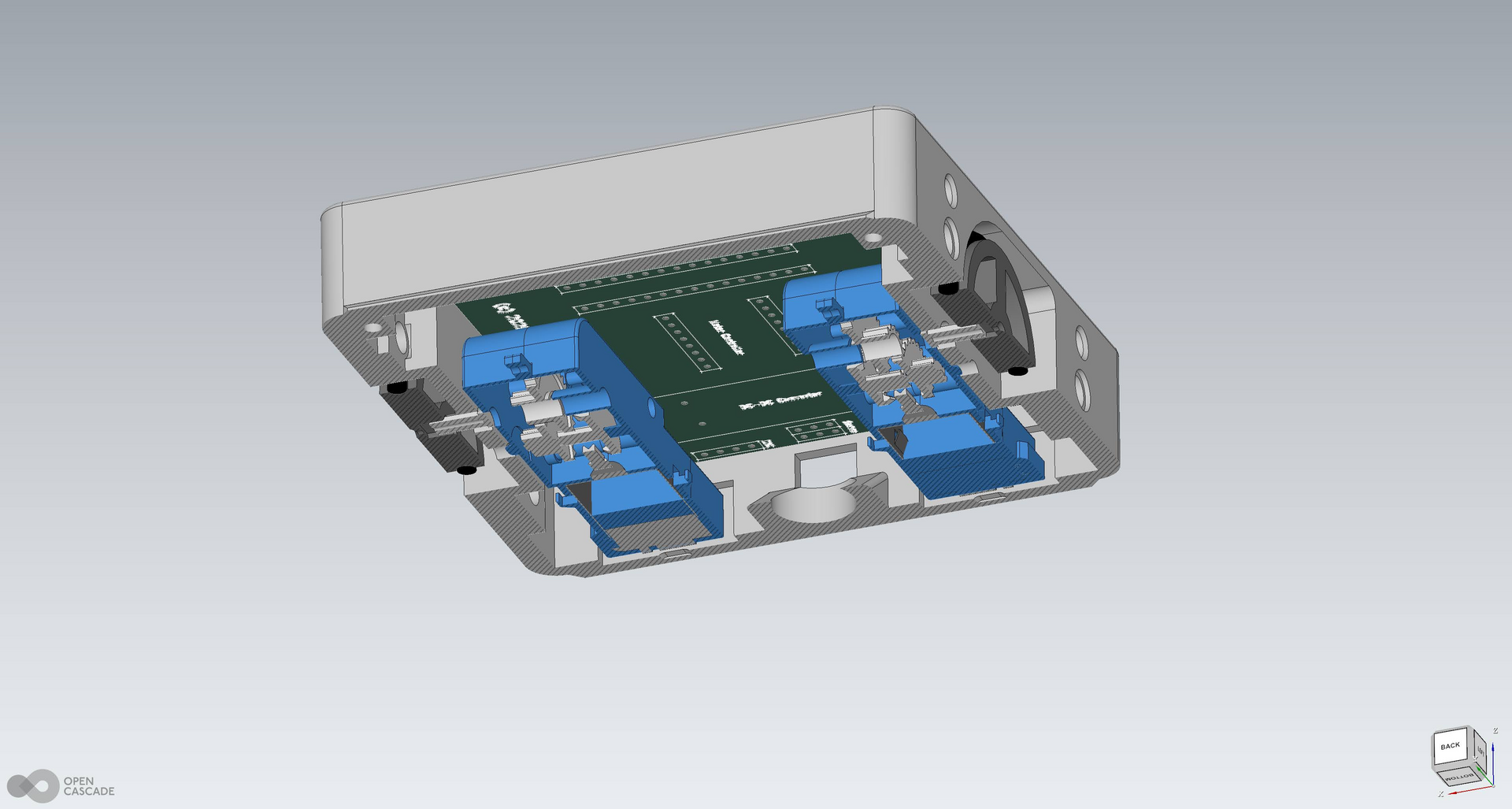
Cutaway CAD of the shell, two geared motors, and the driver board.
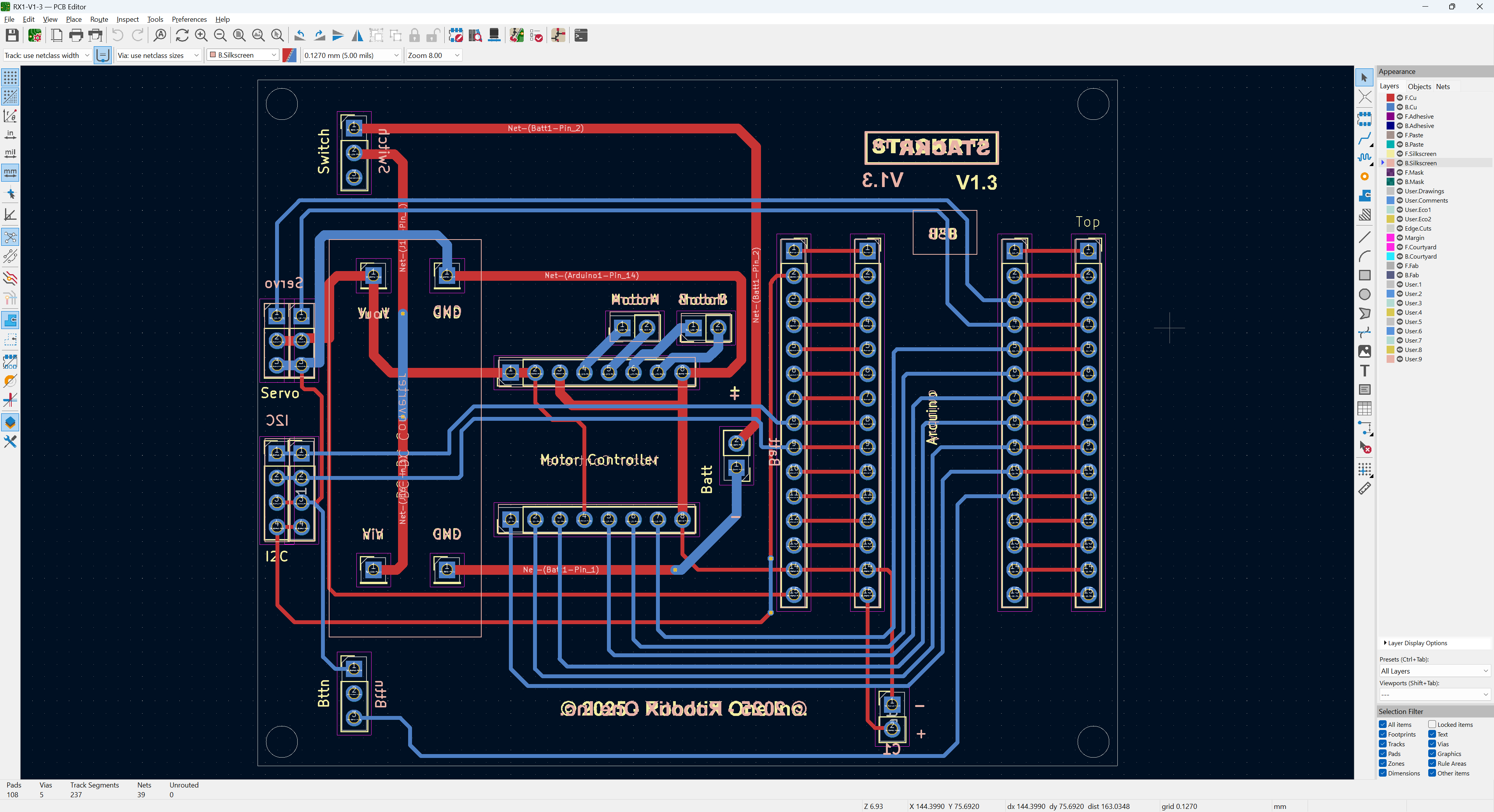
KiCad layout of the Stackr V1.3 board, with the motor controller, Arduino, servo, I2C, and battery.
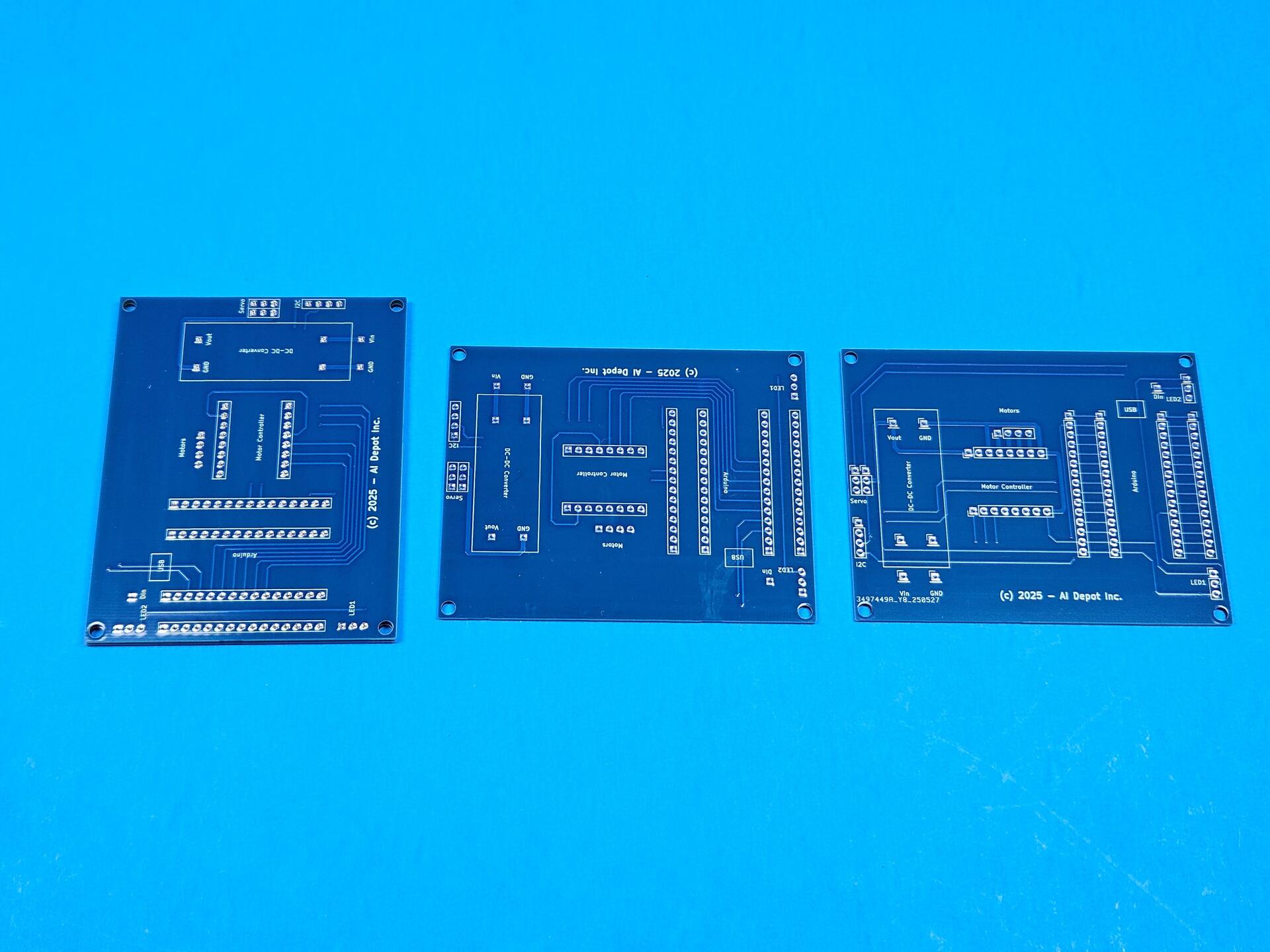
Two bare blue Stackr V1.2 boards, front and back, marked RobotiX One Inc.
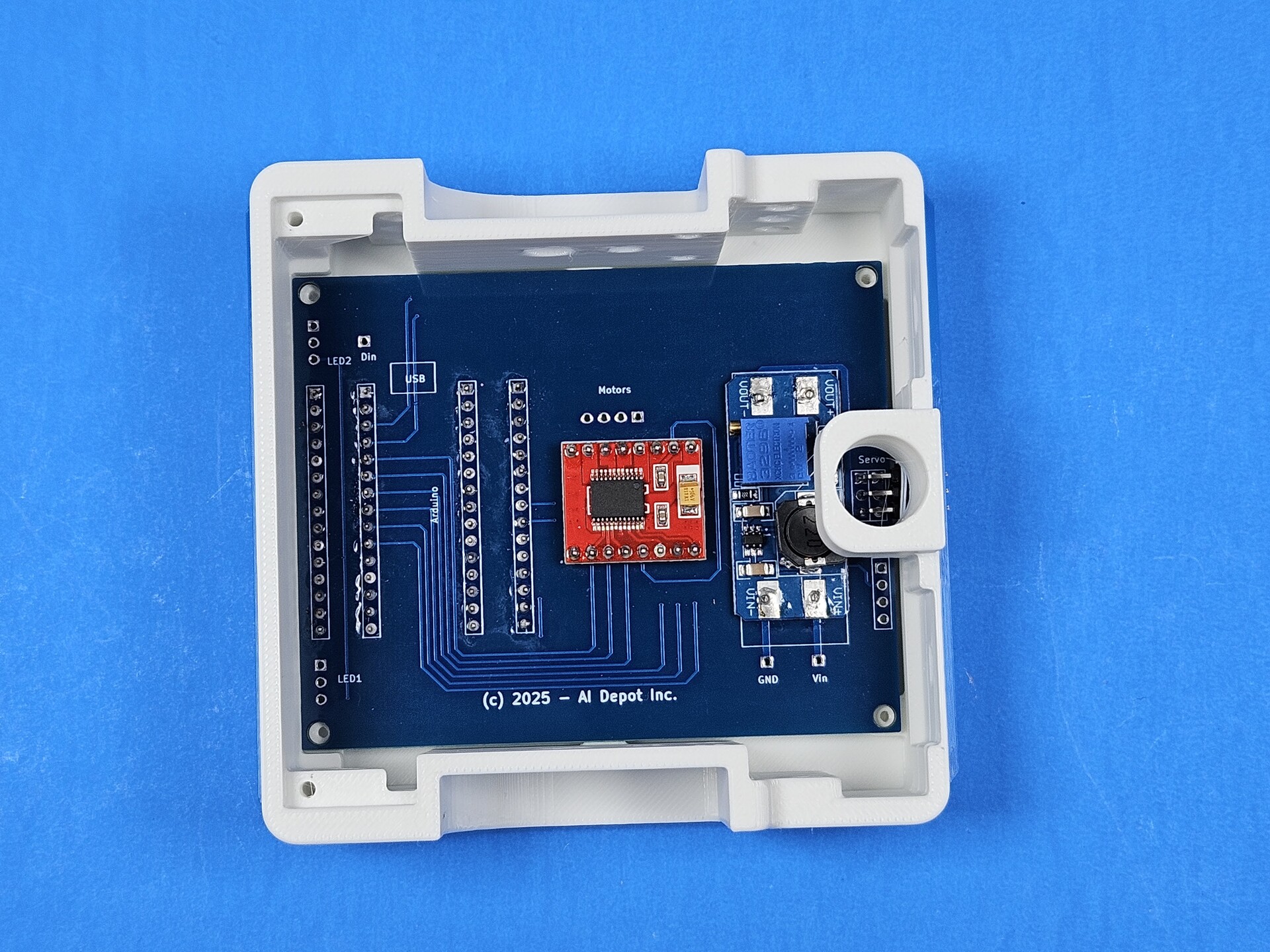
V1.3 board in the white shell with the TB6612FNG, switch, and power parts fitted.
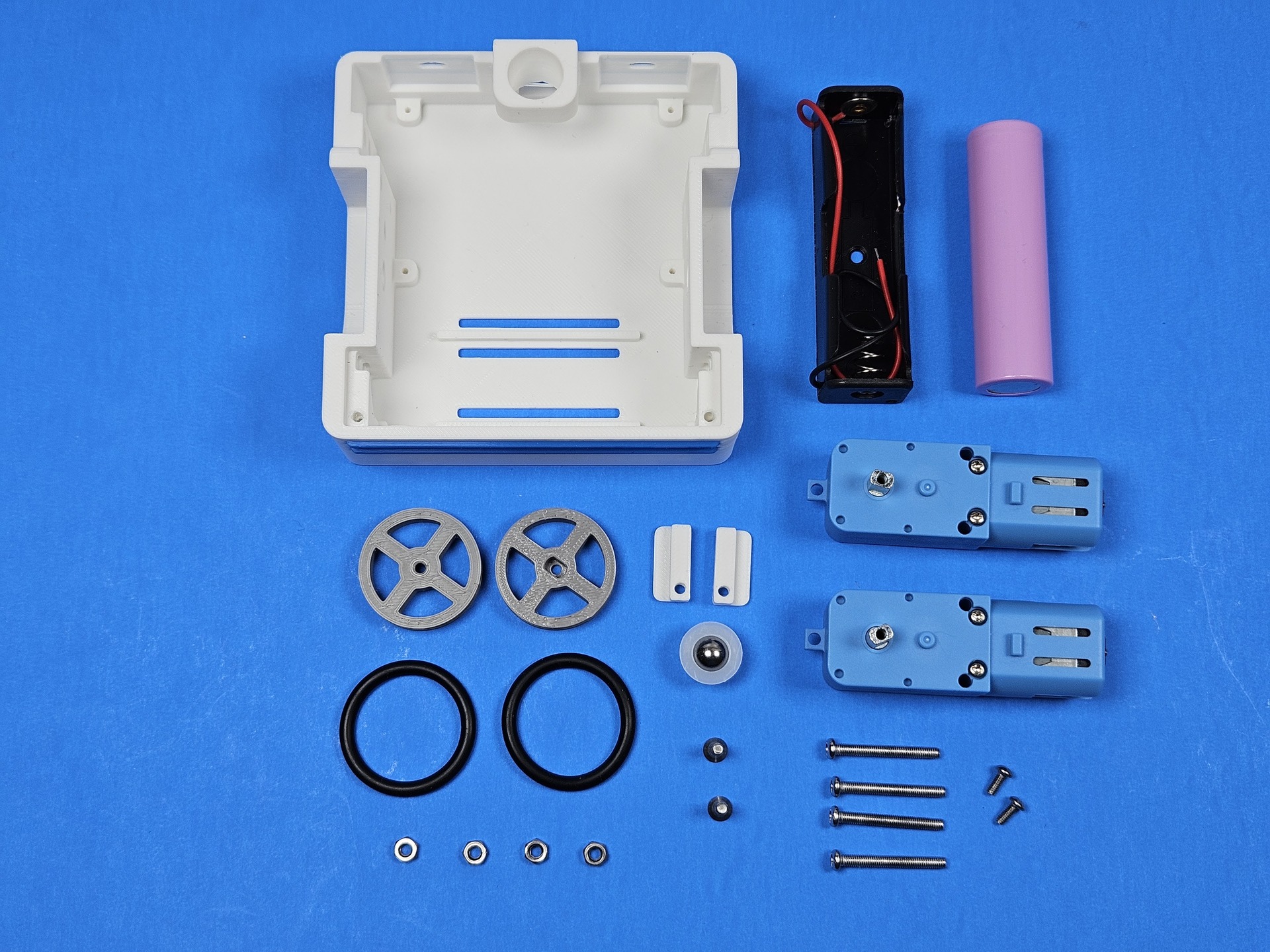
Shell, 18650 cell and holder, two blue gearmotors, wheels, tires, caster ball, and screws.
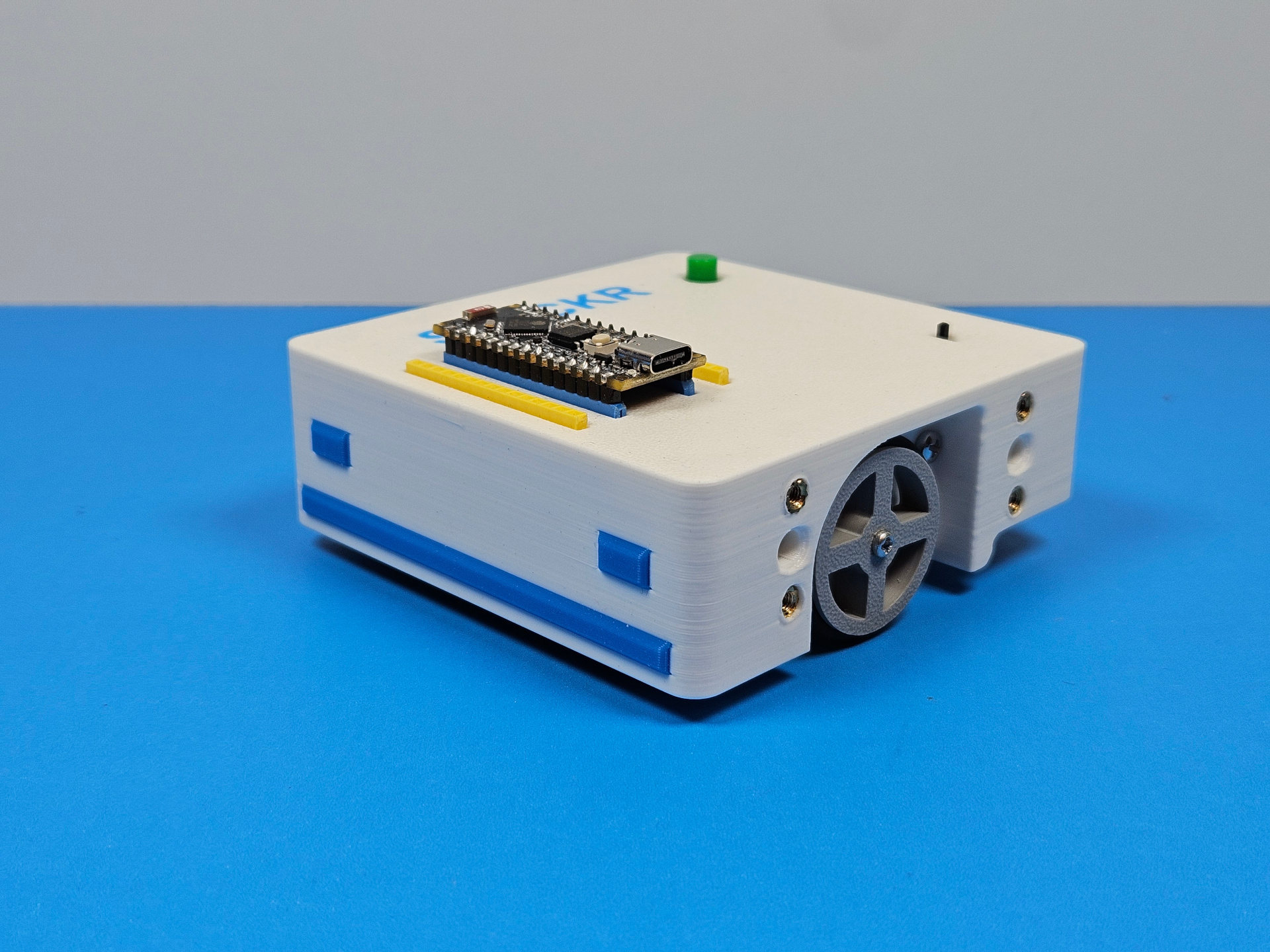
Finished white Stackr with blue stripes, a Nano ESP32 on the deck, a green button, and a wheel.
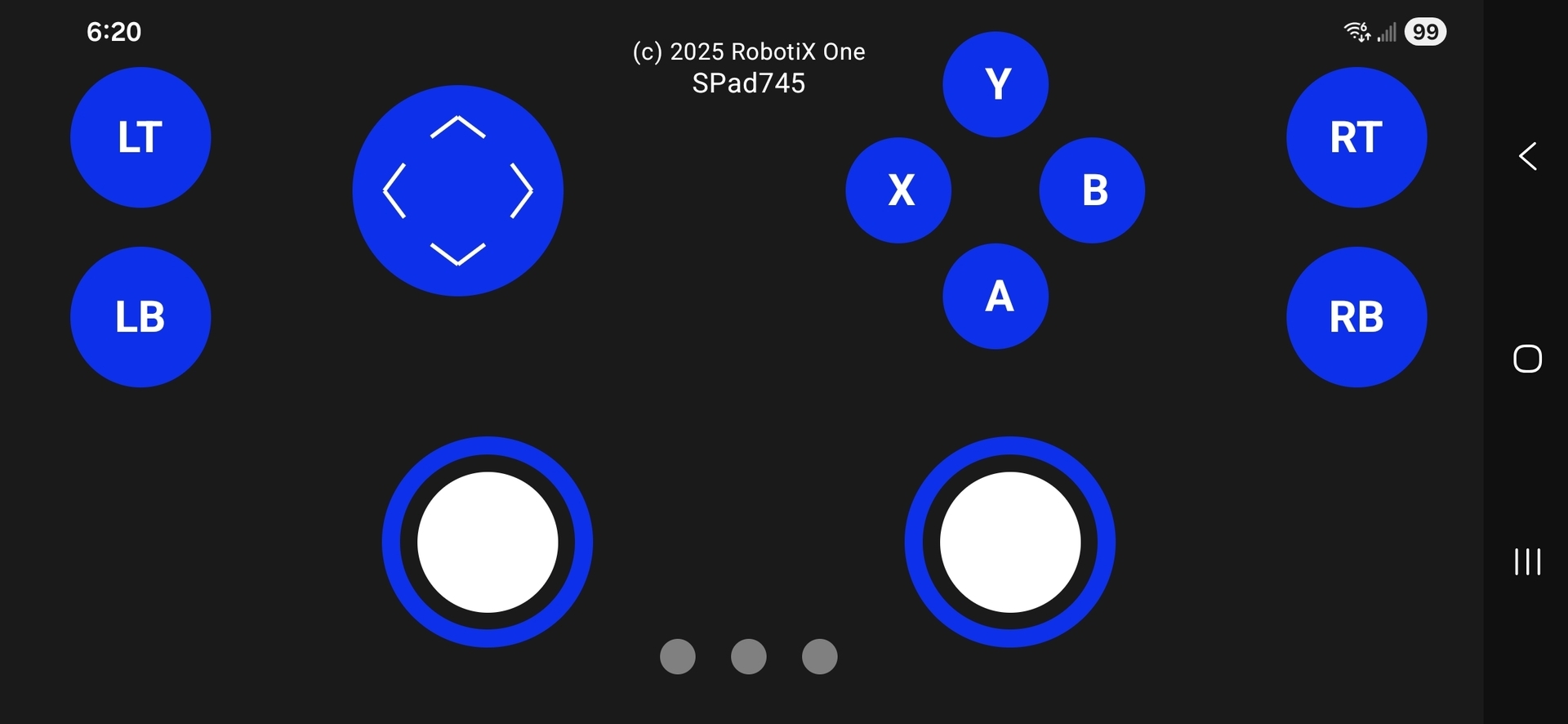
Phone screenshot of the SPad745 gamepad, with a D-pad, sticks, and face buttons.
50 photographs and drawings from this build.
| PARAMETER | SPECIFICATION / VALUE |
|---|---|
| Motors | DC Motors |
| Motor Controller | TB6612FNG |
| Onboard MCU | Arduino Nano ESP32 or Arduino Nano |
| Power Supply | Boost converter |
| Special Design | Electronics |
| Special Design | PCB Design |
| CAD Software | FreeCAD |
| Manufacturing | 3D Printing |
| Communication | WiFi/TCP |
| Communication | BLE |
| Controller | Mobile App |