A 3D printed robot arm on a rotating base. Servos move the shoulder, elbow, wrist, and a tool holder. This arm can be used to hold a pen, a gripper, or other tools.
5-DOF 3D-Printed Robotic Arm: A versatile, servo-driven robotic platform designed to explore inverse kinematics and physical dynamics (torque, forces, and motion). Built with an Arduino Nano ESP32 and PCA9685 board it can be used to control a pen, gripper, or other tools.
| ISSUE | SOLUTION |
|---|---|
| Robot moves were jerky | Improved motion control (increased update frequency for the servos, moved to control the size of the PWM directly rather than using the angle control function), Replaced with better servos |
| Too much flex in the arms | Redesigned to be more sturdy and increased the number of attachment holes. |
| PCA9685 max amperage could not feed all servos | Had to redesign the power delivery lines to the servos while preserving the same connector headers. |
Robot Arm doing a complex move.
Testing each joint of the robot arm.
The entire body of the robot is made of 3D printed components. The base, the links and the tool holder are designed to be 3D printed.
The joints are actuated using digital servo motors. The internal gear mechanism of the servos form the joints of the robot. The servos were selected to provide proper torque The main joint (shoulder) is using a 80kg.cm servo and the elbow and wrist a 35kg.cm servo.
The robot arm was designed with a connector that can accommodate a simple Arduino Nano in case the communication is done using the wired RS232 interface or an Arduino Nano ESP32 if more computing power is needed or a wireless communication is desired.
To accommodate all 5 servos onboard and reduce the load of the MCU a PCA9685 PWM driver board was incorporated in the design. The board has up to 16 servo outputs. This way it allows the robot to add a variety of extensions with extra servos or other PWM actuated motors.
The CAD model, the printed parts, the finished arm, and the boards in the control box.
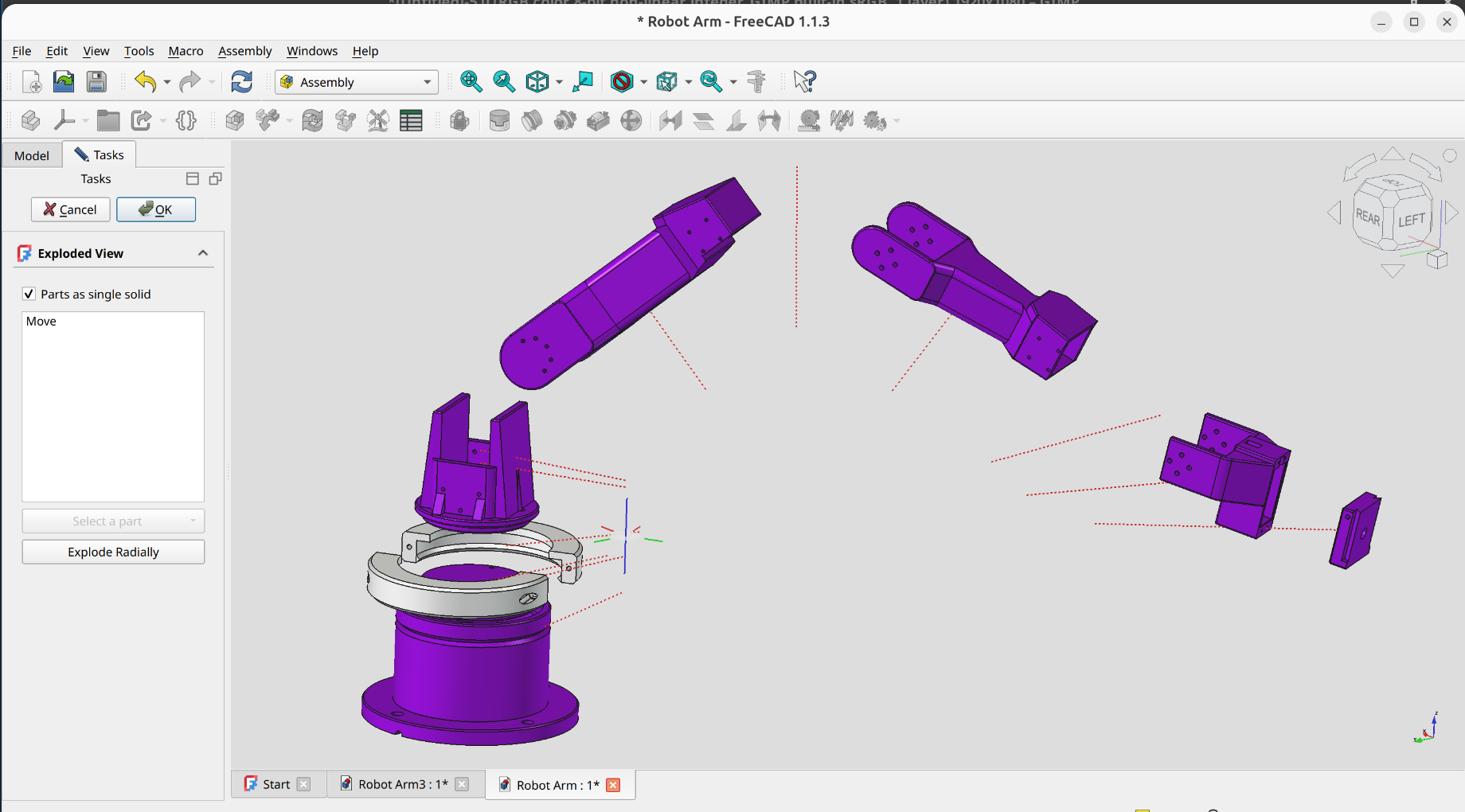
FreeCAD exploded view of the purple arm: flanged base, turn ring, links, and wrist pieces.
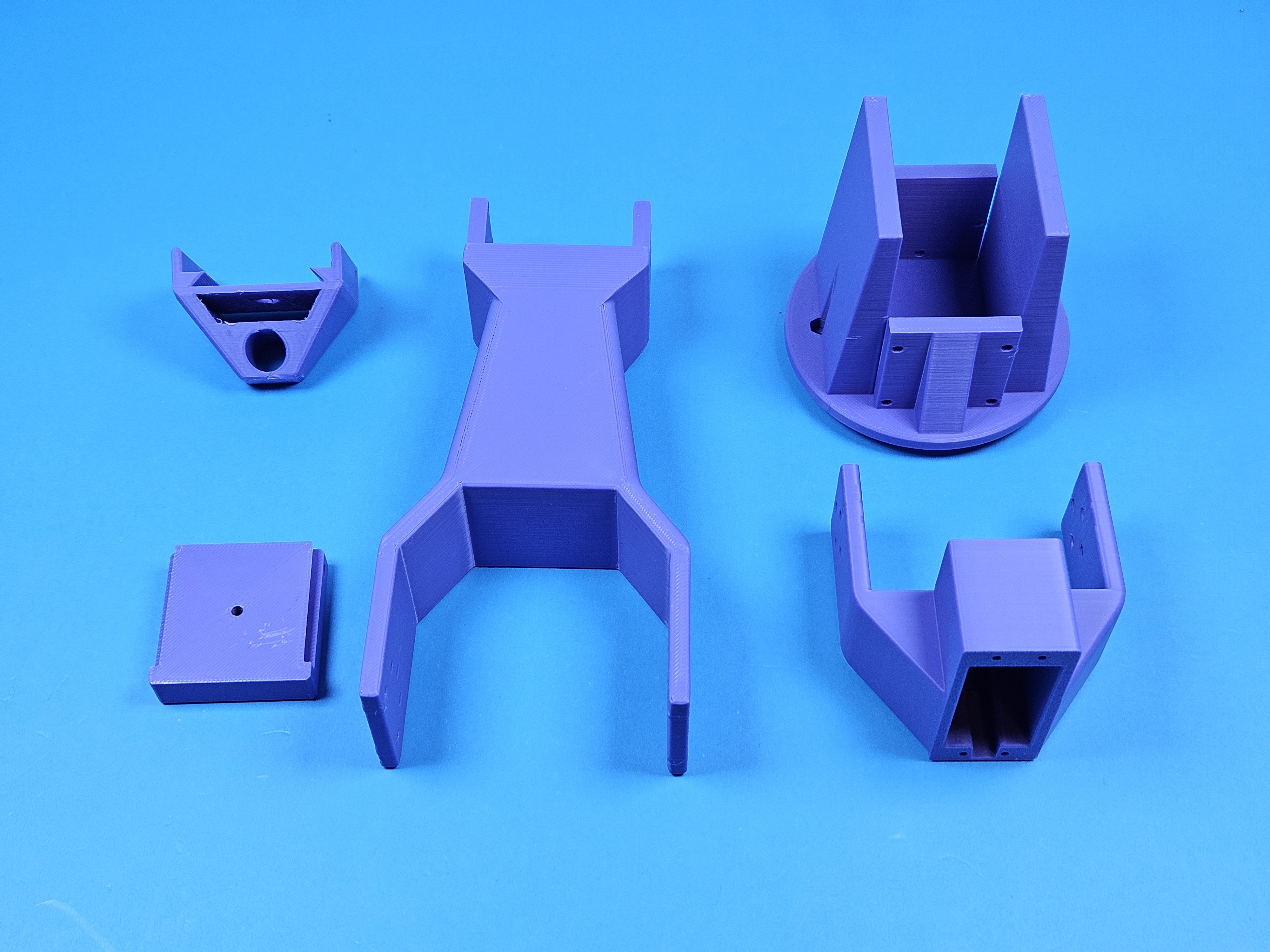
Purple printed base, long link, wrist housings, and a small plate laid out on the bench.
Open purple box with an ESP32-S3, a PCA9685 PWM board, perfboard, and the servo harness.
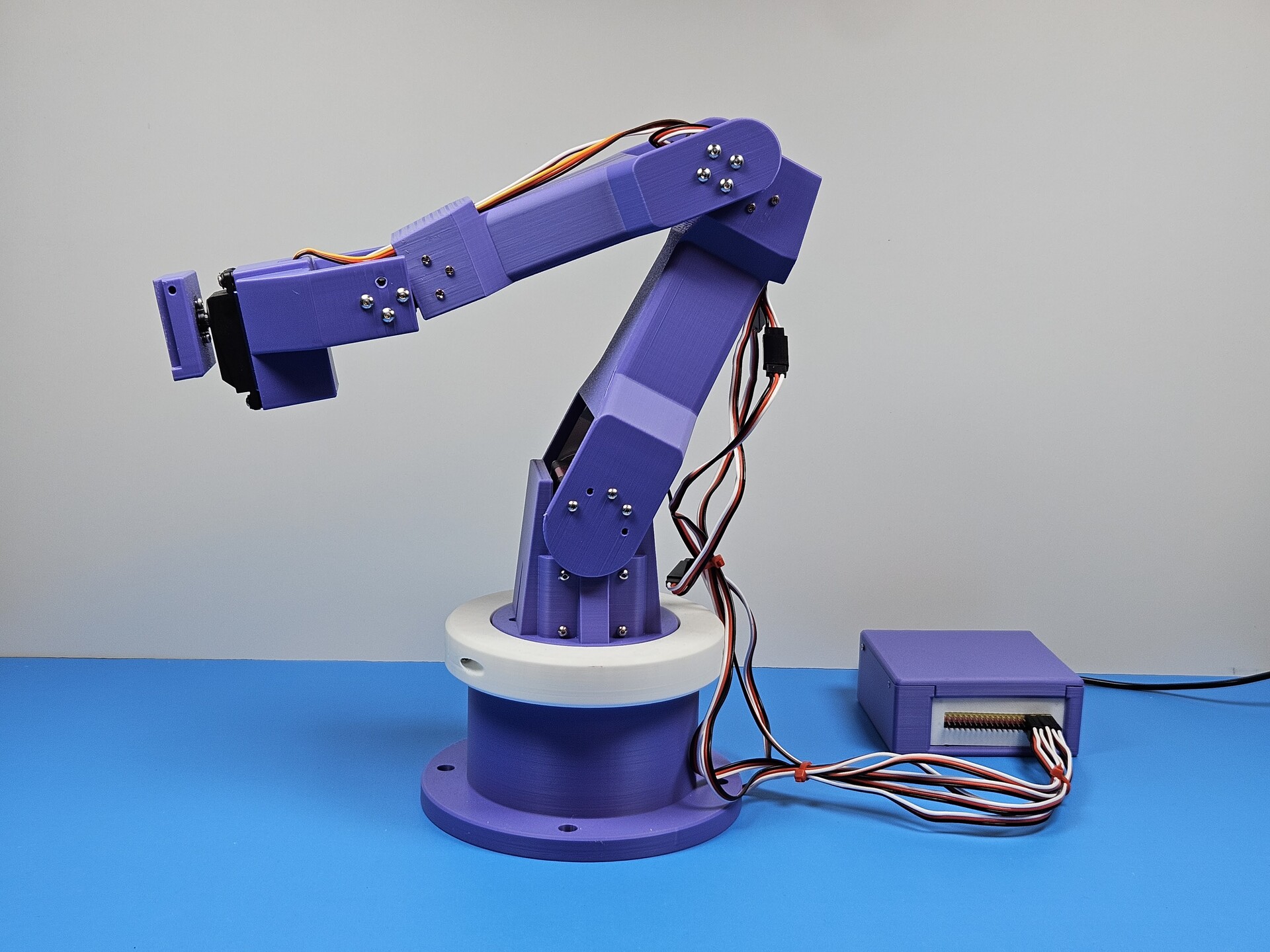
Finished purple arm on its base, with cables running to the closed control box.
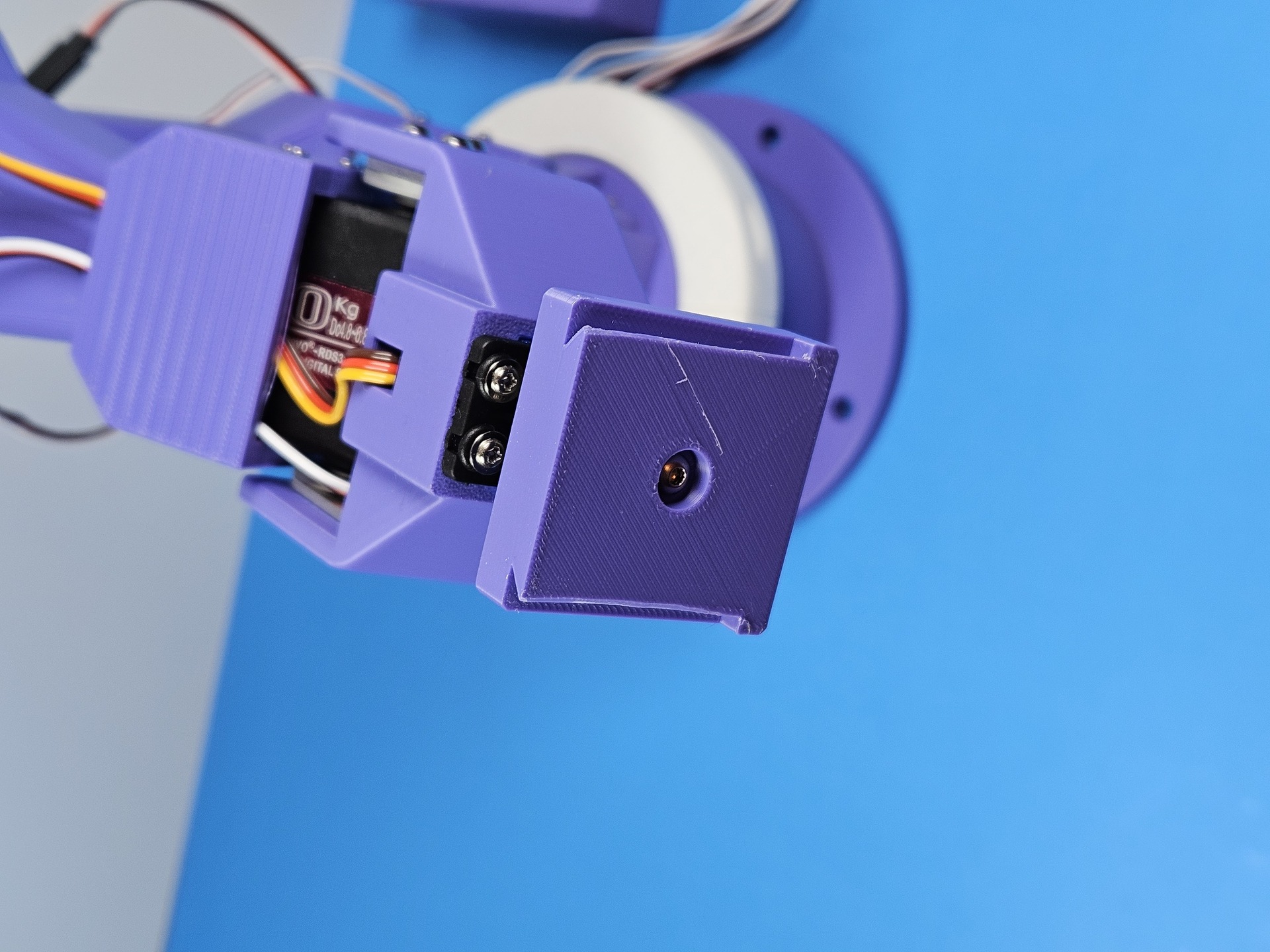
Close-up of the square wrist plate and the DS3225 servo behind it.
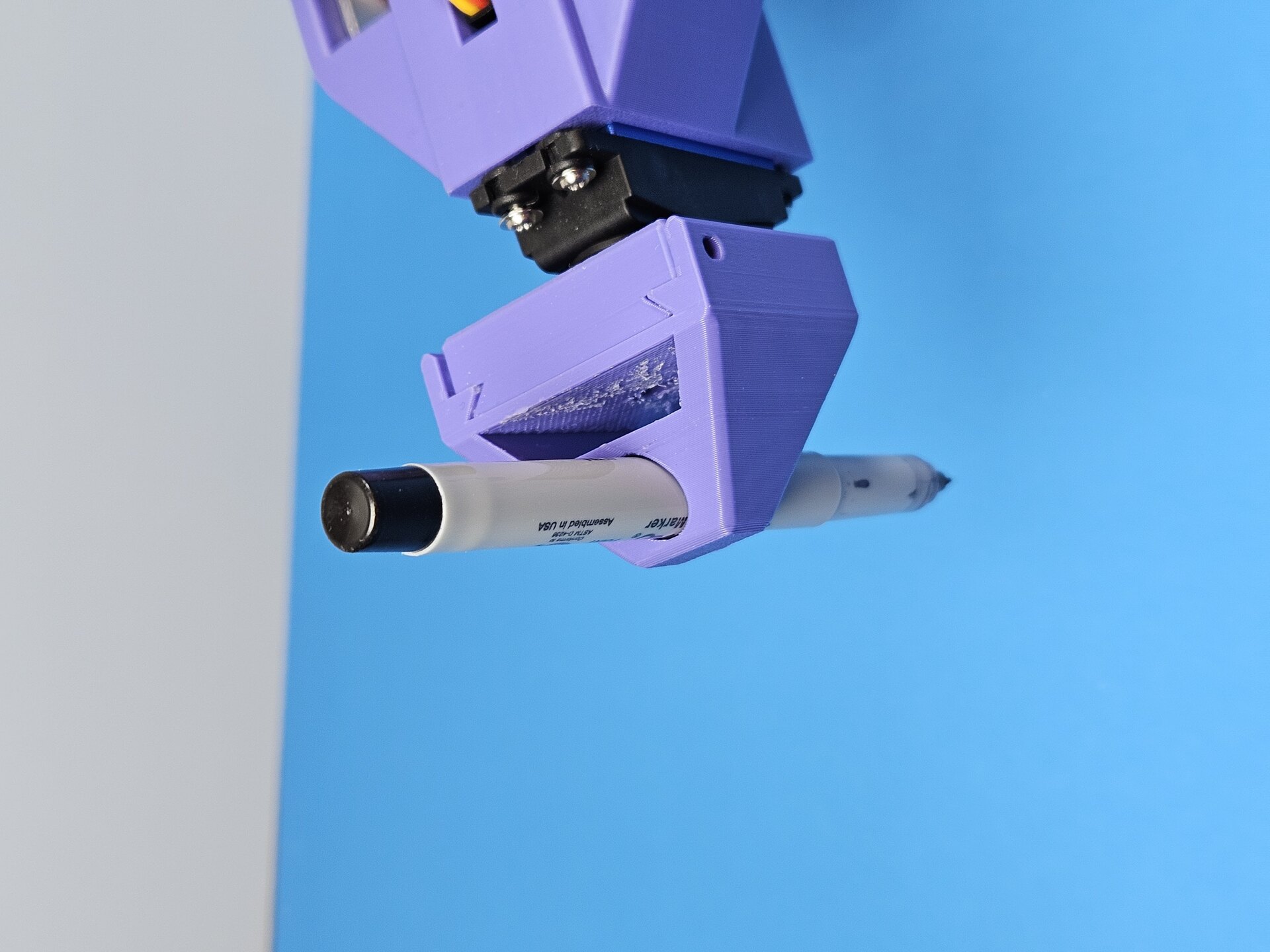
Printed clamp holding a marker at the end of the wrist.
24 photographs and drawings from this build.
| PARAMETER | SPECIFICATION / VALUE |
|---|---|
| Arm Segments | 3D printed |
| High Torque Servos | 80 kg.cm for main segment + 35 kg.cm for elbow and wrist |
| PWM controller | PCA9685 |
| Onboard MCU | Arduino Nano ESP32 or Arduino Nano |
| Special Connector | High current adapter |
| Algorithms | Inverse Kinematics |
| Communication Protocol | Custom Designed |
| Universal Mount | Dove tail slider |
| Electronics Design | MCU+PCA9685 Connectivity |
| Electronics Assembly | Proto board |
| EDA | KiCAD |
| CAD Software | FreeCAD |
| Manufacturing | 3D Printing |
| Special Features | Multi DOF device |
| Communication MCU-PWM Controller | I2C |
| Communication MCU-Desktop | RS232 |