ANTHONY NISTOR // FULL SELF DRIVING

Full Self Driving

A phone mounted on Stackr is the camera. A Python application watches the stream, and the robot drives itself toward the object you select.

// SYSTEM ARCHITECTURE

About the Project

With a simple phone mount attachment for the Stackr I was able to enable a variety of applications. The simplest one is to control the robot remotely outside the line of sight. But the main reason I built this was to add AI vision and allow the robot to “see” and “understand” its environment. Using a distributed architecture, streaming video from the smartphone to a desktop app running YOLO object detection to issue real-time tracking commands back to the robot using BLE or WiFi I was able to make the robot follow objects regardless they were static or in motion.

  • Phone Camera The phone sits in a holder designed for Stackr and sends the camera view as an RTSP stream.
  • YOLO Targeting The Python application recognizes the objects in the image. You pick which visible object the robot should follow.
  • Follow or Scan Driving instructions go out over BLE to follow the object. If the object disappears from view, the robot scans for it.
// CHALLENGES

Challenges

ISSUE SOLUTION
Robot was losing the target Implemented a PID controller to track the target.
Processing time was too long Reduced automatically the resolution of the video streaming. Executed the video stream reading in a separate thread.
On the side movements the image was too blurry for the AI Reduced the speed when turning and every time when the recognition was not possible.
// FSD RUN

Full Self Driving Demo

Stackr driving toward the object you selected.

DEMO.MP4 LIVE DEMO

Follow Run

A recording of the robot following the chosen object.

// HARDWARE & SOFTWARE

System Component Breakdown

01

Phone Mount

A phone is used to stream video from the robot. To mount the phone on the Stackr a holder was designed as an add-on for the robot platform. The holder was designed to accommodate different sizes of phones and to be able to point up or down at different angle to accommodate different applications.

02

AI Software

The main goal of this project was to use vision AI to control the robot. As a result the YOLO (You only look once) AI algorithm is used.

03

Software Architecture

Because Arduino MCU onboard of Stackr is underpowered for significant AI tasks a distributed architecture is used. The camera streams the video from the phone. A desktop application runs the AI and sends instructions to Stackr using BLE.

04

Communication

TCP over WiFi is used for video streaming and BLE connection to send driving instructions to Stackr.

// PROJECT MEDIA

Build Pictures

The printed holder, the phone on Stackr, and the camera stream.
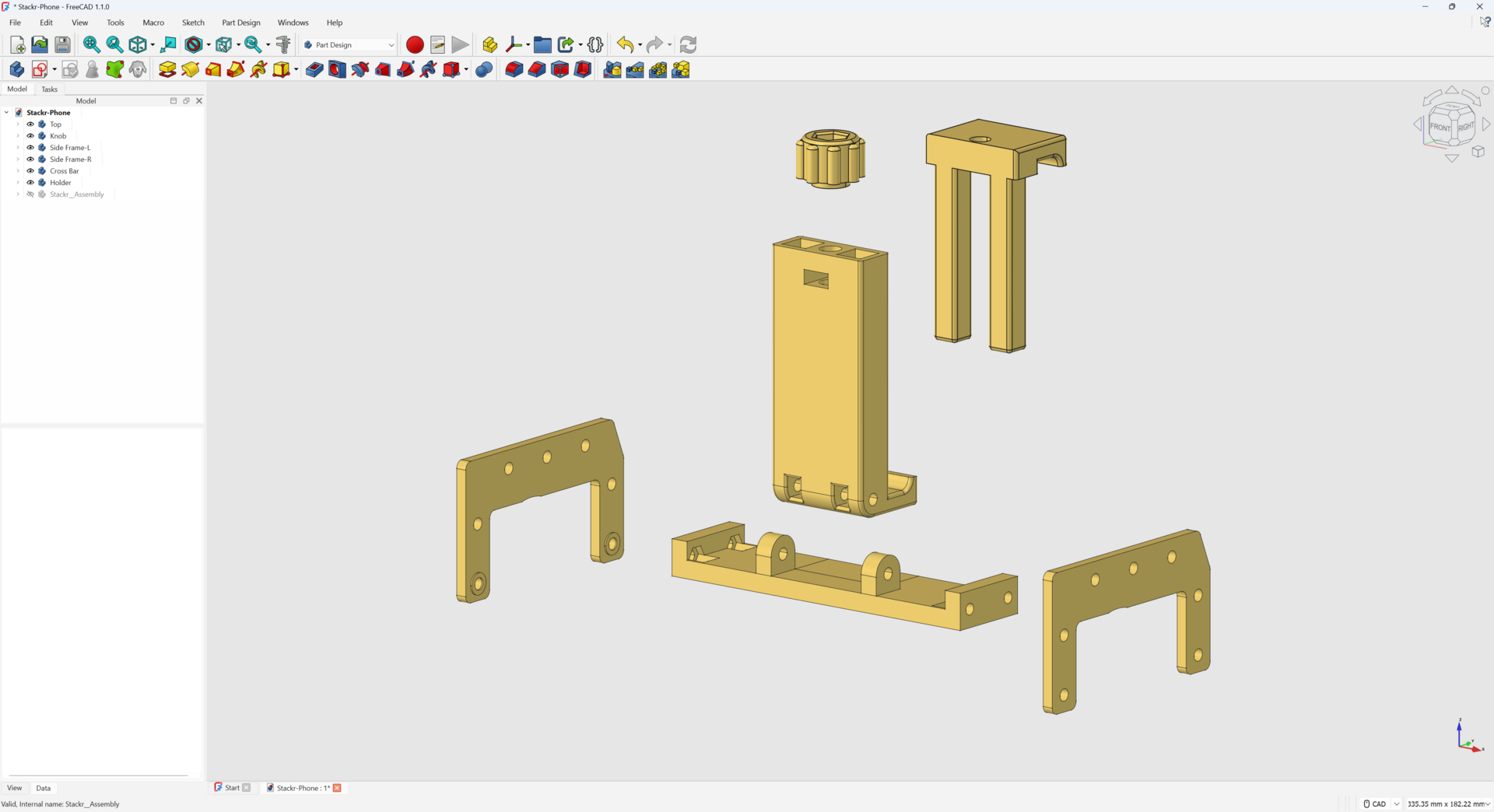
CAD Design
CLICK TO ENLARGE

CAD Design

FreeCAD parts for the yellow phone holder: side frames, cross bar, post, and clamp knob.
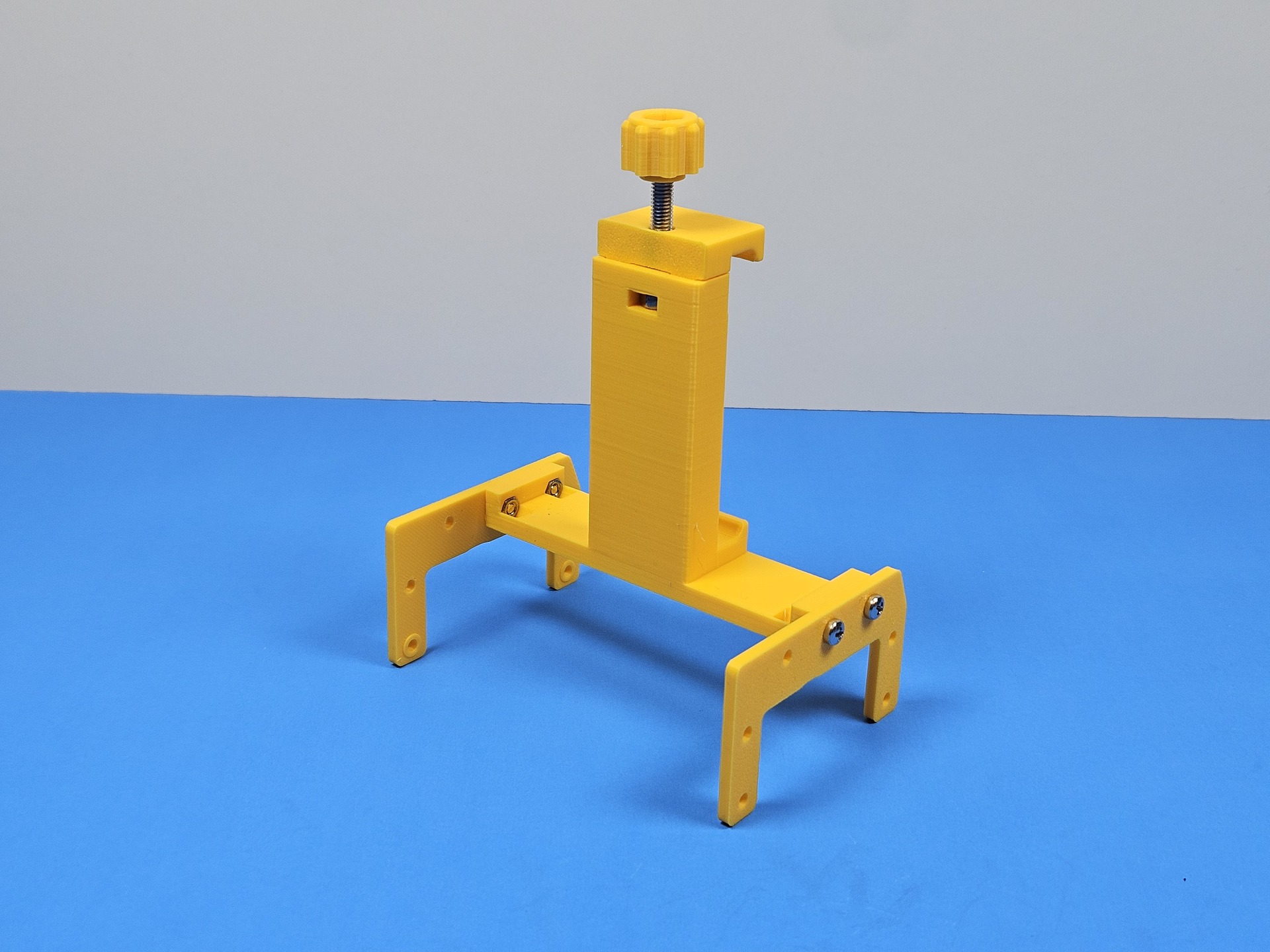
3D Printed Parts Assembled
CLICK TO ENLARGE

3D Printed Parts Assembled

Yellow printed holder screwed together, with the threaded clamp and knob on top.
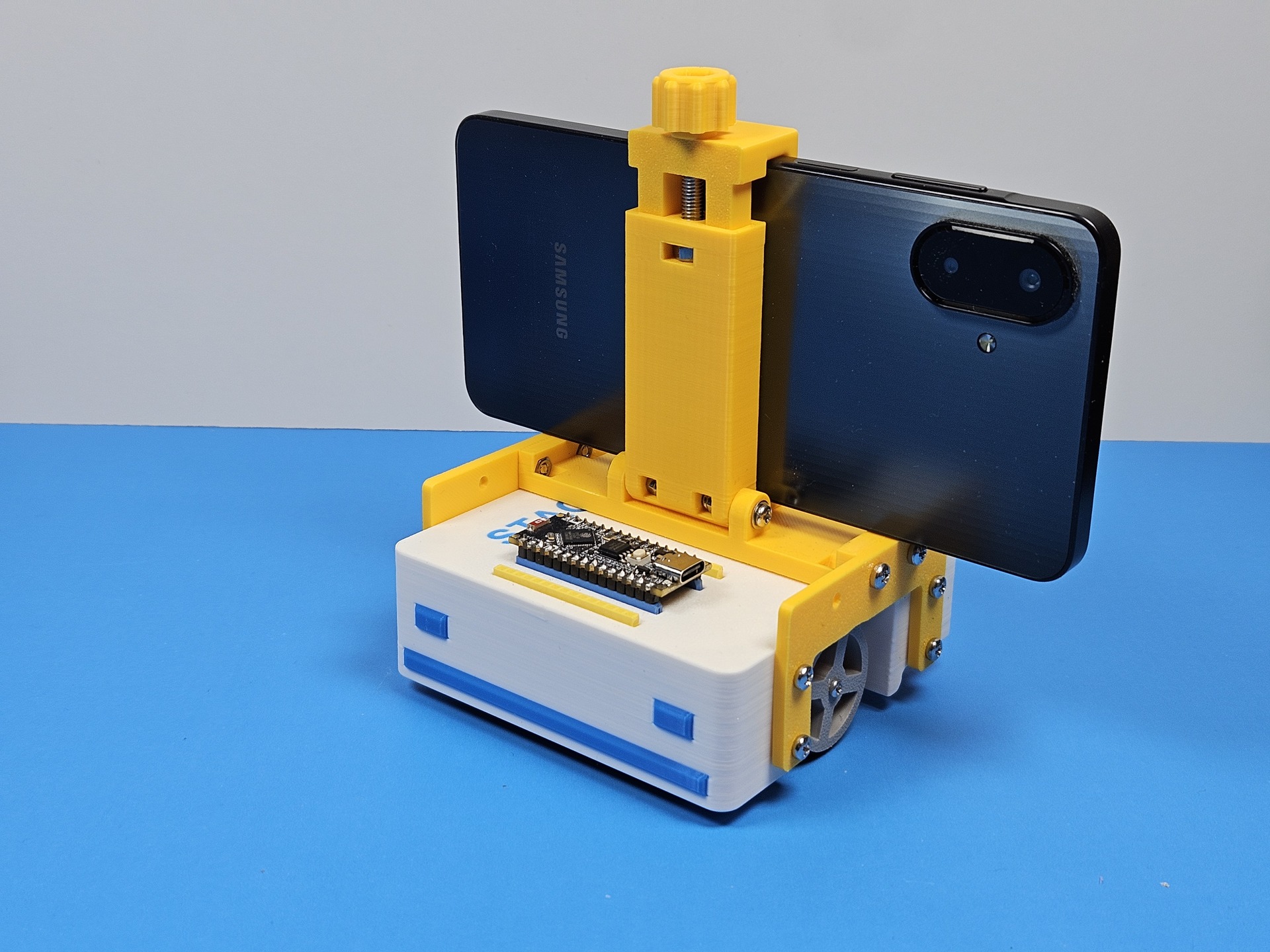
Assembled Robot
CLICK TO ENLARGE

Assembled Robot

Samsung phone clamped in the yellow holder on a white Stackr, with a Nano ESP32 on the deck.
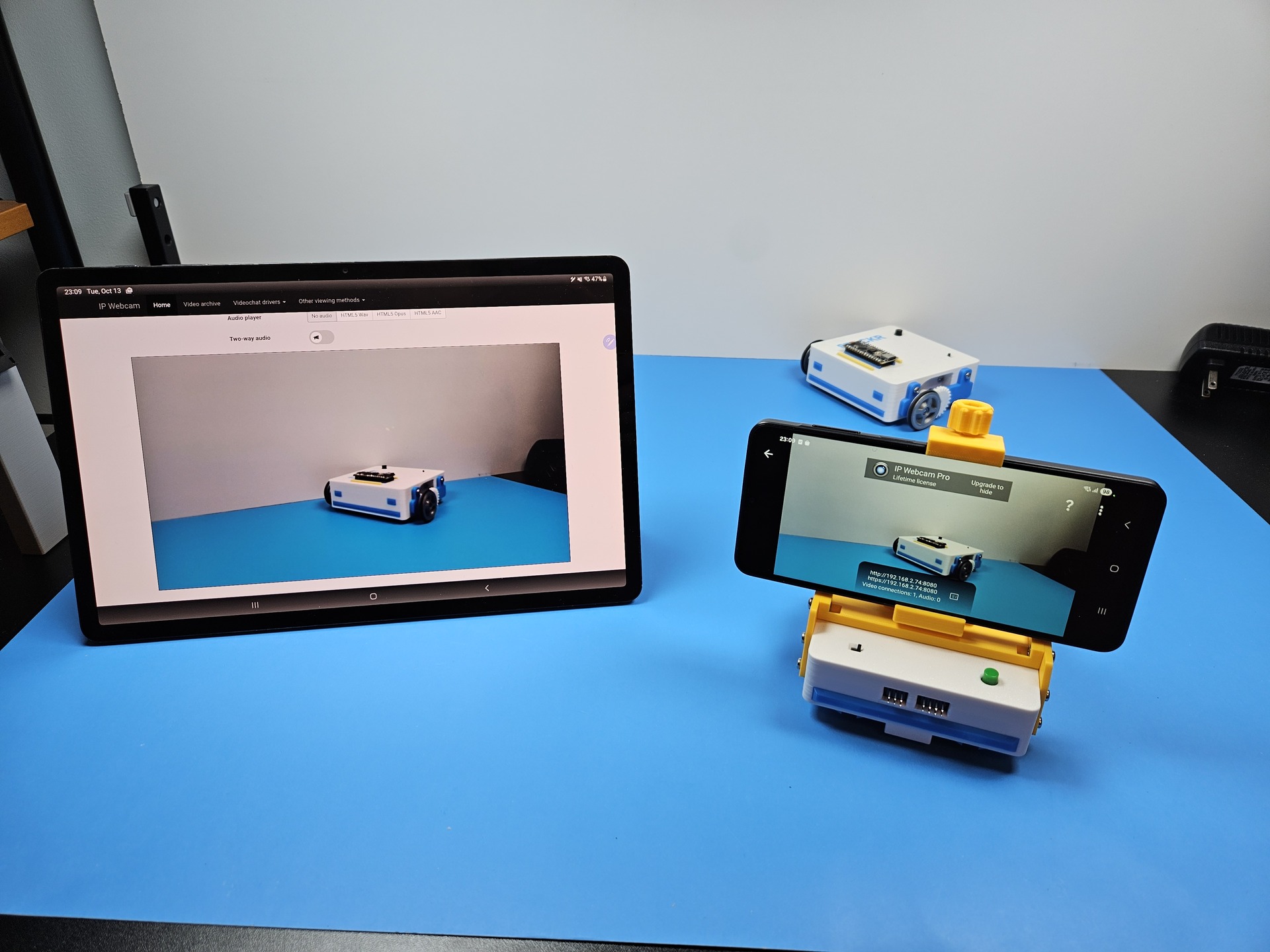
Out of Sight Mode Testing
CLICK TO ENLARGE

Out of Sight Mode Testing

A tablet and a phone both showing the robot camera stream, with Stackr sitting on the bench behind them.

// SLIDESHOW

All Project Pictures

13 photographs and drawings from this build.

20260122_171945.jpg 1 / 13
20260122_171945.jpg
// TECHNICAL SPECIFICATIONS

System Parameters

PARAMETER SPECIFICATION / VALUE
Communication WiFi/TCP
Communication BLE
Algorithms AI
CAD Software FreeCAD
Manufacturing 3D Printing
Special Features Fully autonomous